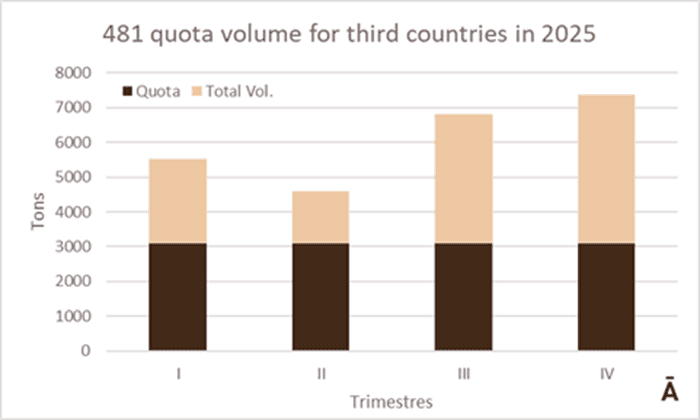
In the first two days of October, the European Commission reported that 7,378.6 tons of beef from third countries were waiting to enter under the quarterly quota 481 for the last three months of the year.
The volume more than doubles the 3,100-ton quota, meaning the entire contingent will have to pay more than half of the full levy to access the EU market. Countries eligible to ship under this quota are Argentina, Australia, Canada, New Zealand, and Uruguay, but a large proportion comes from the two South American countries.
The year-on-year reduction in the quarterly quota 481 allocation has not prevented growing import volumes. The EU’s beef import needs are such that importers choose to largely exceed the quota, pay the corresponding share of the tariff, but secure the product to market internally, where demand for beef remains strong despite opposing lobbies within the European bureaucracy.
The full levy for chilled, boneless beef in the EU is €3.034 per kilo plus 12.8% of the product’s value.
As of January 1, 2026, the quarterly quota for third countries —used mainly by Uruguay and Argentina— will fall to 2,500 tons and stabilize at that volume, ending the gradual reduction that began in 2020. Meanwhile, the quarterly quota exclusively available to the United States will rise to 8,750 tons from 2026 onward, but U.S. usage is currently very limited due to high domestic beef prices and production system constraints for accessing the EU, including the ban on the use of hormones and growth promotants.