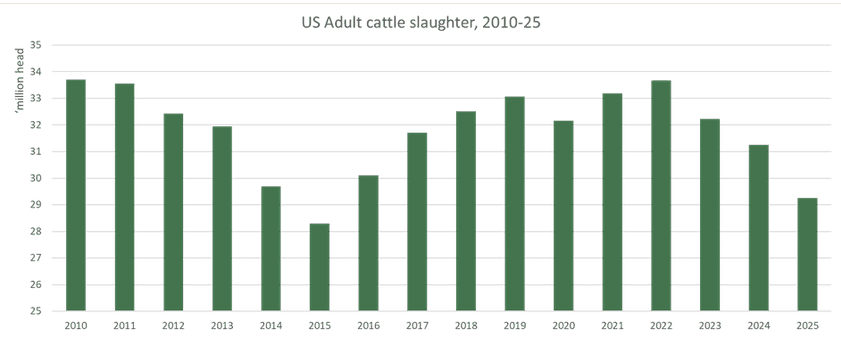
US cattle slaughter fell 6.4% in 2025 to 29.3 million head, the lowest level since 2015 and the third consecutive annual decline. Since 2022, slaughter volumes are down 13%, reflecting a prolonged herd destocking process that has been underway since 2019.
The tighter availability of cattle was most evident in females: cow slaughter dropped 11% (the lowest since 2005), reducing domestic supplies of lean manufacturing beef, the main beef product imported by the United States. Heifer and steer slaughter also declined (-7% each), curbing feedlot beef output and the supply of USDA-graded cuts.
The volume impact was partially offset by heavier carcass weights, which reached a record 398 kg. Even so, total production fell 3.6% to 11.2 million tons, the lowest level since 2016. The female slaughter rate ended the year at 48.8%, above the equilibrium threshold, indicating no clear signs of herd rebuilding yet.
Looking ahead, supply is set to remain tight until a meaningful stock reconstruction takes hold. In this context, the US market faces lower domestic availability—of both lean and feedlot beef—which reshapes trade flows and prices and opens room for imports during the rebuilding cycle.
Source: USDA / MLA.