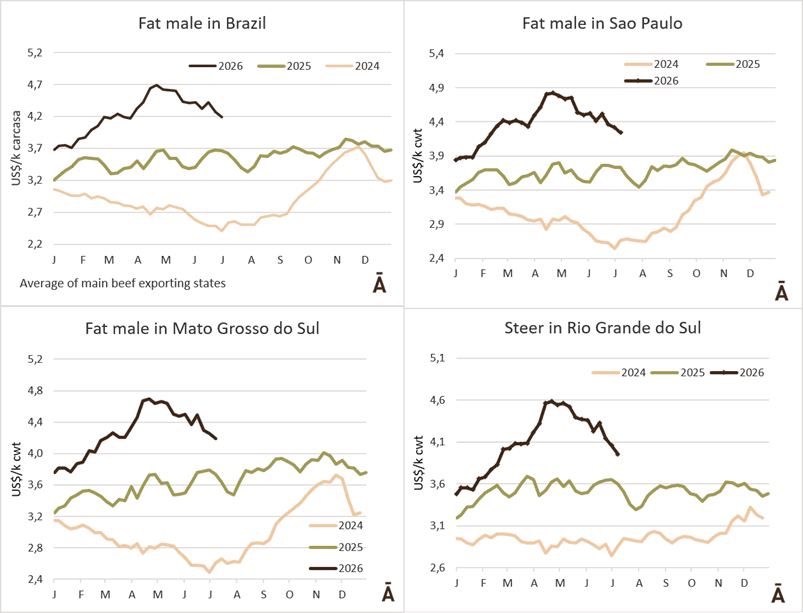
The boi gordo market remains under downward pressure. “Reduced buying interest, higher idle capacity at meatpacking plants, and, in some cases, temporary production shutdowns or collective vacations for employees reflect weaker demand for finished cattle and a more cautious approach by processors when purchasing raw material,” Agrifatto said.
The main reason behind the weaker demand is the end of production for China due to the exhaustion of the 2026 import quota. In addition, the possibility that exports to the European Union could be restricted from early September is creating further uncertainty and adding downward pressure to the market.
The average boi gordo price across Brazil's main cattle-producing states fell R$ 6.8 during the week to R$ 318.2 per arroba, based on Scot Consultoria's state quotations, excluding the Funrural tax and assuming 30-day payment terms. Over the past three weeks, the average price declined by nearly R$ 20 per arroba (5.8%). The average price of slaughter cows posted a slightly smaller decline (-4.4%), as this category is not destined for the Chinese market, which only accepts cattle under 30 months of age at slaughter.
Despite the weaker demand, many producers have resisted accepting lower prices, reducing the average waiting period for slaughter bookings to seven business days nationwide.
Wholesale beef sales on Sunday were strong, supported by Brazil's national team's match in the FIFA World Cup, according to Agrifatto. Despite Brazil's elimination, the consultancy expects demand to remain "relatively firm" during the first half of the month. In the wholesale market, however, it warned that the completion of shipments to China could increase domestic bone-in beef supplies in the coming weeks, putting additional downward pressure on prices.