After cattle slaughter ran well below year-ago levels during the first five months of the year, June began to show signs of recovery, a trend that is likely to strengthen during the second half of the year.
June marked the end of the downward trend in slaughter, posting a modest 1% year-on-year increase. During the first five months, slaughter declined every month compared to the previous year, accumulating a reduction of nearly 200,000 head (-19%).
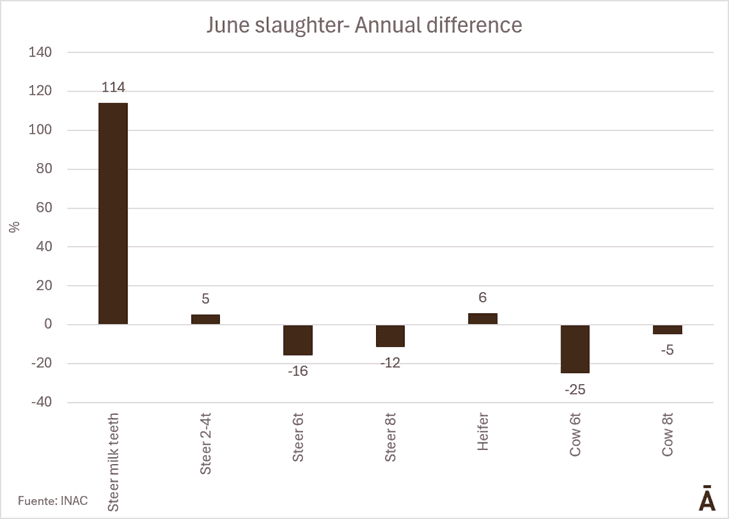
The recovery is being driven by male cattle. INAC reported that steer slaughter in June increased 6.1% from a year earlier. The same was not true for cows, whose slaughter declined 7.6% year-on-year.
This is exactly what was expected: the recovery in slaughter activity is being led by males, particularly younger steers. The growing importance of feedlots in finishing young steers and heifers is underpinning this increase. Slaughter of milk-tooth steers in June was more than double the level of the same month in 2025, while slaughter of two- to four-tooth steers increased 5.2%. Older steers, however, remained below year-ago levels.
As the year progresses, larger numbers of cattle in these younger categories are expected to become available for slaughter.
This will contrast with cow slaughter, which appears likely to remain below last year's levels as producers retain more breeding females in response to the high prices being paid for calves.
During the second half of 2025, 1.18 million cattle were slaughtered, including 563,000 steers (48% of the total) and 593,000 cows (50%). During the second half of this year, those proportions are expected to reverse, with steers accounting for a larger share of slaughter.