Editor: Rafael Tardáguila
rafael@tardaguila.com.uy
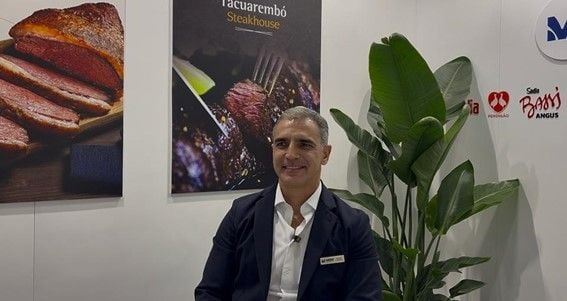
Uncertainty over the exhaustion of Brazil’s quota in China dominated much of the discussion at SIAL Shanghai 2026. However, according to Alison Navarro, head of MBRF’s beef division, the outlook is becoming clearer, with Brazil likely able to continue exporting to China through July before redirecting part of its production to other markets, particularly the United States.
“After the first few days of the fair, it became quite clear that Brazil will continue producing and shipping to China until late June or early July,” Navarro said in an interview with WBR.
He said many of the questions from Chinese importers focused on how much longer Brazil would be able to supply the market under the quota system. According to Navarro, the company is already working on alternatives to maintain its presence in China through its industrial platforms in Uruguay and Argentina once Brazil’s quota is exhausted.
Navarro said prices in China remain relatively stable, although somewhat below the peaks seen in early April. “Values have come off a bit from the highs, but there have been no major changes. The 8-cut forequarter set moved from US$/t 7,000–7,200 to around US$/t 6,600–6,800,” he said.
He also dismissed speculation that China might exclude some Brazilian beef that entered before the formal implementation of the safeguard from the quota calculation. “The Chinese government was very clear: everything that entered from January 1 onward counts within the quota,” he said. That means around 250,000 tons shipped by Brazil at the end of 2025 ended up being counted against the 2026 quota.
Regarding Brazil’s outlook outside quota, Navarro said a significant share of volume will likely be redirected to the United States. “Brazil could export between 50,000 and 60,000 tons per month to the United States,” he projected. If that materializes, Brazil would become the leading external supplier to the US market, ahead of Australia.
The executive said MBRF has competitive advantages in repositioning those flows thanks to its US presence through National Beef and its operations in Uruguay and Argentina.
Another focus for Brazil is the sanitary negotiation with the European Union regarding the use of certain veterinary medicines. While acknowledging a potential risk of restrictions from September onward, Navarro said he remains confident a solution will be reached before then.
“The Brazilian government is highly engaged, and we believe there will be positive developments in the coming weeks,” he said. In his view, Brazil will continue operating normally in the European market.
Navarro also highlighted the company’s growing geographic diversification, particularly in Southeast Asia and the Middle East, where MBRF operates its own distribution structures and local commercial teams. “That allows us to reach supermarkets, food service, and processors directly, with more added value and less dependence on China,” he said.
The executive acknowledged that Brazil still faces an important limitation compared with competitors such as Uruguay and Argentina: the inability to export bone-in beef to China. However, he said negotiations are well advanced to secure approval for both bone-in beef and offal. “We may have some positive news during this year,” he said.
Looking ahead, Navarro was clearly optimistic about the global beef market. “Global demand continues to grow, while supply will remain limited in Brazil, Uruguay, Argentina, and also the United States,” he said.
In his view, the global market will remain defined by tight supply and firm prices. “I believe we will continue to see a sustained market, and probably higher prices heading into 2027,” he concluded.