Editor: Rafael Tardáguila
rafael@tardaguila.com.uy
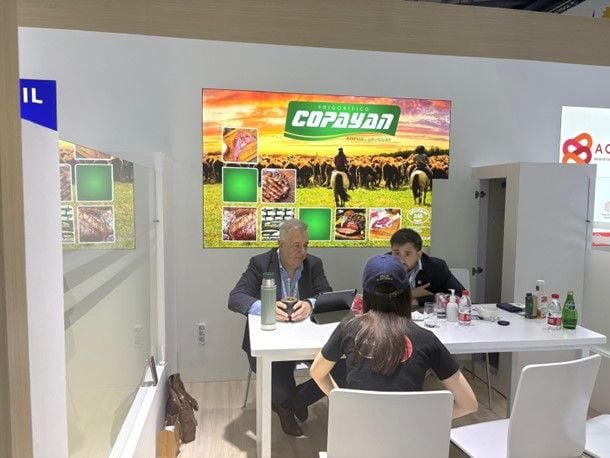
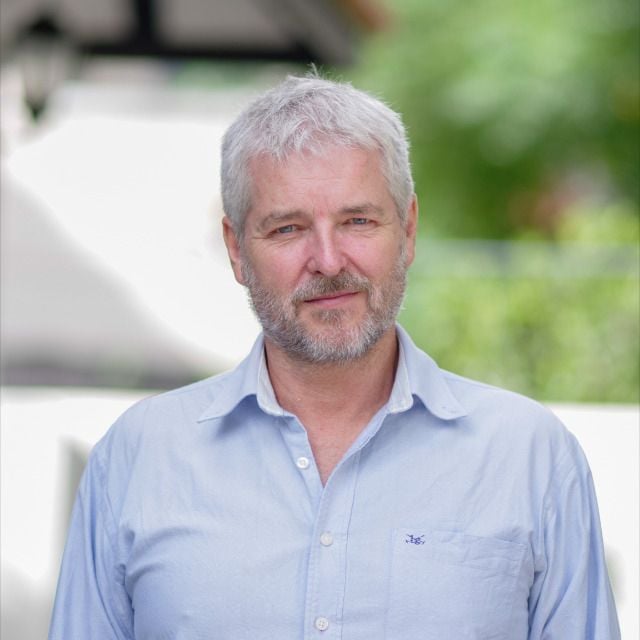
Fernando González, principal at Copayan, spoke with WBR from SIAL Shanghai about the international market outlook, the situation facing Uruguay’s beef industry, and the expansion plans of the Rocha-based processor. He said Uruguay is heading into a year of lower activity due to tight cattle supply, although prospects remain positive thanks to sustained international demand.
—What is your assessment of this year’s SIAL Shanghai?
—It was a fair with strong attendance and plenty of inquiries. Clearly, all the uncertainty surrounding Brazil’s quota generated more interest and more visitors than last year. Perhaps there was less business actually closed, but there was a lot of client interaction and interesting expectations for the second half of the year.
—There seemed to be considerable nervousness at the Brazilian stands regarding the quota issue. Is Uruguay in a different situation?
—I think so. Uruguay has the comfort of knowing it will be able to operate within quota throughout the year. But we also have a reality of lower cattle availability, so there isn’t the same urgency to sell. We know this will be a year of lower activity.
—Copayan started as a plant heavily focused on the domestic market. Is that still the case?
—Yes, absolutely. Even though today we are a well-established exporter, we have never moved away from our domestic supply focus or our roots in the local market.
—Is the domestic market keeping pace with international prices?
—Increasingly so. The market is much more transparent today. When Brazil has competitive prices, that reaches the Uruguayan consumer, and when international values rise, that also gets reflected. We also play both roles: we are producers and importers.
—How do you see the current moment for animal protein?
—I think we are going through a very favorable shift. For a long time, animal protein was heavily stigmatized, and today there is much broader recognition of its nutritional benefits. That helps sustain firm demand even with more limited supply.
—How do you see the evolution of Uruguay’s cattle sector?
—We see it becoming more efficient and productive. From the processing side, we always wish things would move faster, but Uruguayan producers have been doing a very good job. There is more professionalism and stronger incentives to grow.
—Uruguay remains a high-cost country compared to regional competitors.
—Yes, that is a reality we live with. Uruguay has scale limitations and high costs, which means we have to be extremely efficient. Some things depend on the political sphere and making the country more competitive, but we have to operate within that reality.
—Is Copayan continuing to invest despite lower activity?
—Yes. Since day one, we have never stopped investing. We just celebrated our 20th anniversary, and we have been under construction almost continuously. We are currently finishing a major expansion of our cold storage capacity, both for frozen and chilled products. We are also advancing with a new boiler and a rendering plant, seeking greater efficiency and better industrial utilization.
—What is the plant’s current slaughter capacity?
—We have capacity for 500 cattle per day. Unfortunately, we are not able to operate at full capacity today because of limited supply, but the infrastructure is ready for a Uruguay with greater production in the future.
—What are your expectations for slaughter this year?
—I think the second half will show somewhat more supply. We will probably end the year around 10% below 2025, but with better prospects for next year.
—And the international market?
—It is very difficult to project prices in such a changing environment, with quotas, tariffs, and constant political decisions. But the key point is that global beef demand remains firm. And if this situation stops being cyclical and becomes structural, Uruguay needs to take advantage by producing more.