Editor: Rafael Tardáguila
rafael@tardaguila.com.uy
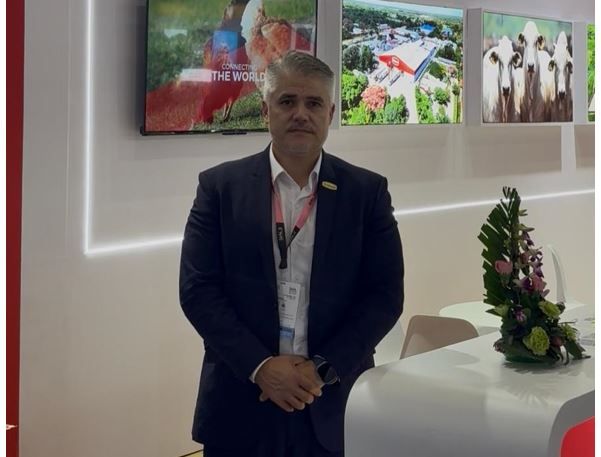
The opening of the Chinese market in 2019 marked a turning point for Bolivia’s beef industry. That was the view of Jaime Barrenechea, general manager of Fridosa, who highlighted the strong modernization and expansion process the country’s cattle sector has undergone in recent years, driven by beef exports to China.
“China generated a major transformation across Bolivia’s entire production chain,” Barrenechea said during SIAL Shanghai 2026. According to him, access to that market accelerated investment in cow-calf operations, backgrounding, finishing, feedlots, and industrial capacity, deeply reshaping the livestock sector.
Before 2019, Bolivia was much more focused on the domestic market and smaller-scale regional exports. Today, China has become the main destination for Bolivian beef.
The executive explained that Bolivia operates under a protocol similar to Brazil’s for exports to China: boneless beef from cattle under 30 months of age. The country is not yet approved to export offal or manufacturing cow beef, although it is working to expand access.
Barrenechea said Bolivia now ranks just behind the traditional major exporters to China and expects to continue growing. “There is enormous motivation to expand the herd and produce more efficiently,” he said.
One of the most significant changes has taken place in production systems. Before China’s market opening, Bolivia was producing cattle averaging 200–220 kg carcass at 30 to 36 months of age. Today, the average is around 270 kg carcass at 20 to 24 months.
“We have reduced the production cycle by one-third and added between 25% and 30% more beef from the same animal,” he said. That progress has been driven mainly by the expansion of feedlots, along with improvements in genetics, nutrition, and animal health management.
The Fridosa executive said Bolivia’s cattle sector has undergone strong professionalization over the past two decades and argued that the quality of Bolivian beef can now compete with any international origin. “We have exceptional beef quality,” he said.
Looking ahead, Barrenechea said the priority is opening new markets. “Markets can turn quickly, and you need alternatives,” he said. In that regard, he said Bolivia expects positive developments with Chile in the second half of the year and highlighted the joint work between the public and private sectors in international sanitary negotiations.
He also noted that Bolivia holds sanitary status as a country free of foot-and-mouth disease without vaccination and negligible risk for bovine spongiform encephalopathy (BSE). “Our greatest asset is our sanitary status, and we must protect it at all costs,” he said.
According to Barrenechea, Bolivia’s cattle herd has already surpassed 12 million head and the country is currently in a strong female retention phase to continue expanding production.