The supply of grass-fed finished cattle remains limited, but demand has become increasingly cautious as exporters monitor the downward pressure affecting key international markets.
The intense cold weather that has prevailed since the first half of May has delayed pasture growth. Winter forages and improved pastures are behind schedule, while native grasslands have stopped growing for several weeks.
Processors continue to rely heavily on feedlot cattle, with occupancy rates remaining very high at both company-owned and independent feedlots.
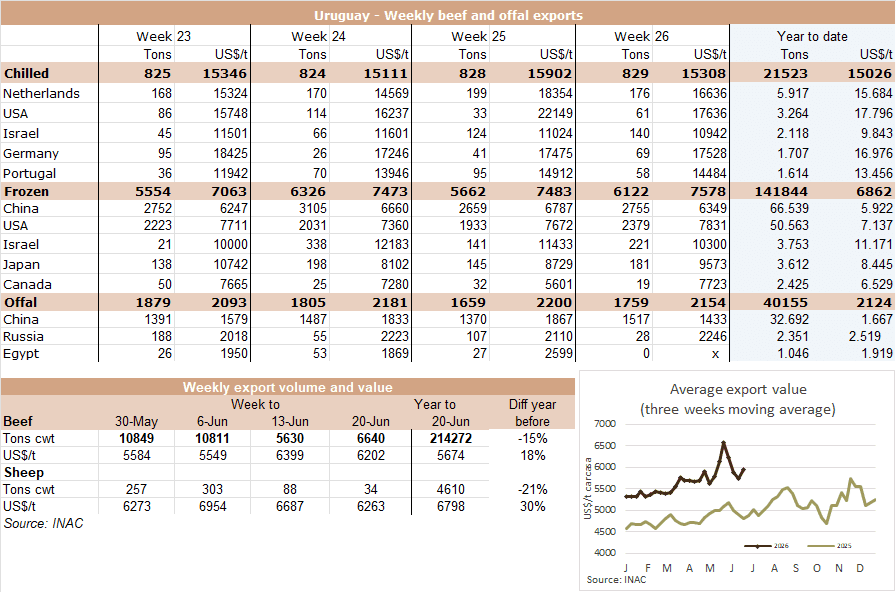
Difficulties placing beef in international markets have led processors to adopt a cautious buying strategy. “If they can't buy at the price they're targeting, they simply don't buy,” one livestock intermediary told World Beef Report (WBR).
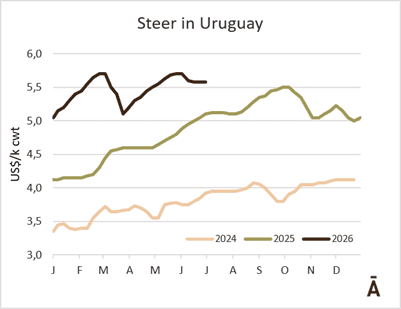
Against this backdrop, cattle prices remained unchanged from the previous week. Special steers continue to trade at around US$ 5.60/kg carcass weight, while good-quality steers are quoted at US$ 5.50-5.55/kg. Heavy cows are trading at US$ 5.25/kg.
There are currently two distinct markets for heifers. Lightweight heifers purchased by the domestic trade are bringing up to US$ 5.60/kg —matching special steer prices— otherwise they are bought by feedlots. Heavier heifers destined for export are trading at US$ 5.45-5.50/kg. A similar situation applies to well-finished lightweight steers weighing 420-430 kg, which are in strong demand from both the domestic market and feedlots.
Slaughter bookings are currently running around 8-10 days after purchases are finalized.
The outlook is for a stable market in the coming days, although developments in international beef markets will determine whether current price levels can be sustained.