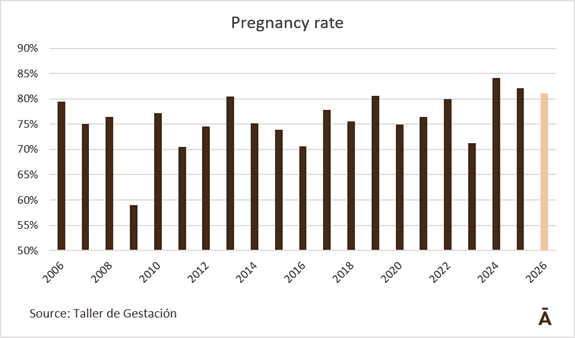
The 24th Beef Cattle Pregnancy Diagnosis Evaluation Workshop confirmed an average pregnancy rate of 81.1% across more than 300,000 breeding females evaluated. Technical specialists concluded that differences in results are increasingly driven by management practices rather than weather conditions.
Uruguay’s cattle industry once again demonstrated a high degree of resilience in the face of adverse climatic conditions. Results presented on Tuesday at the Durazno Rural Association showed an average pregnancy rate of 81.1% from a sample of 303,721 females, of which 246,318 were confirmed pregnant. The figure points to calf production once again exceeding 3 million head in the upcoming calf crop.
It also marks only the fifth time in the history of the workshop that the pregnancy rate has surpassed 80%, a particularly significant result considering that several of the country’s main cow-calf regions experienced a marked water deficit during the summer.
For Emilio Machado, a member of the technical team, the key finding is no longer the pregnancy rate itself but rather the statistical evidence showing that management has become the determining factor behind the reproductive stability achieved by Uruguay’s beef cow herd.