The European Union confirmed that imports of Brazilian beef will be suspended as of this Thursday, September 3, after deeming the guarantees provided by the country insufficient to comply with the bloc’s new requirements on the use of antimicrobials in animal production. The measure also covers poultry meat, eggs and honey.
Brazil was removed in May from the list of countries considered compliant with the new European standards. Since then, the government and the private sector have sought to prevent trade from being disrupted, including through the implementation of a new control protocol in July. However, the European Commission reiterated that exports can only resume once the country demonstrates full compliance with the requirements, the Pecuaria news website reported.
Regaining access to the market could take particularly long for beef, as the EU requires compliance with the protocol to be demonstrated throughout the animal’s entire life cycle. Government and industry sources estimate that the first cattle fully meeting the new conditions may not become available until mid-2028. Around 200 farms have so far applied to join the new system.
The Brazilian industry wants the EU to accept a transitional arrangement allowing shipments to continue while the new controls are implemented and verified, but the bloc has so far rejected that possibility. The suspension was also confirmed by a European Commission spokesperson to Reuters.
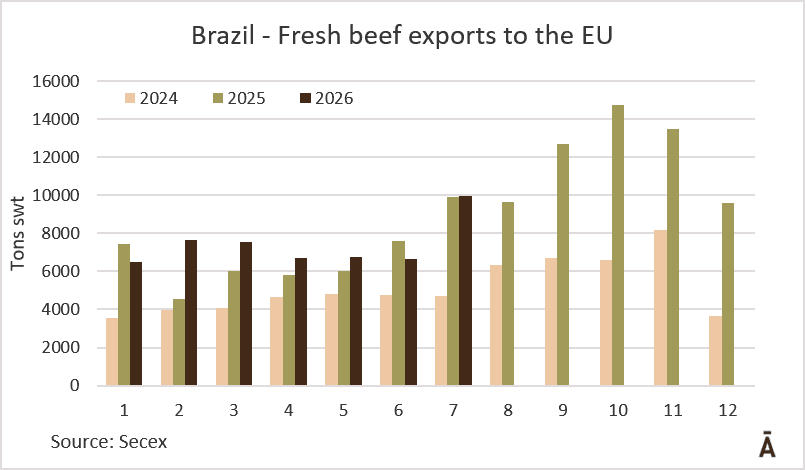
In January-July, Brazil exported 17,851 tons of chilled beef and 33,873 tons of frozen beef to the European Union, averaging 2,550 and 4,839 tons per month, respectively. Brazil’s shipments to the EU usually increase between September and November, when more EU-eligible traceable cattle become available.